
The front of your home is more than curb appeal. It is the first experience people have with your property, and it sets the tone before anyone ever steps inside.
A luxurious front entry does not have to mean overdone, formal, or excessive. In fact, the most expensive-looking homes usually feel thoughtful, layered, comfortable, and intentional. The difference is often found in scale, detail, materials, and how the garden supports the architecture.
Here are 10 strategic ways to make the front of your home look more luxurious from the street, the sidewalk, and the front door.
1. Upgrade Moldings, Millwork, and Architectural Details
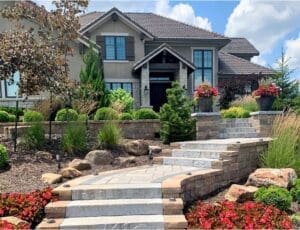 One of the fastest ways to make the front of a home feel more expensive is to improve the architectural detailing.
Updated trim, moldings, millwork, brackets, shutters, columns, corbels, beams, or entry details can dramatically elevate the feel of a home regardless of its size, scale, or architectural style.
A small home with thoughtful architectural details often feels more custom than a large home with flat, builder-grade finishes. These details add shadow, depth, craftsmanship, and permanence.
This works beautifully across styles:
- ✔ A modern home can feel more refined with clean, dimensional trim.
- ✔ A traditional home can feel richer with more substantial moldings.
- ✔ A cottage or old-world home can feel more charming with trellises, brackets, or layered woodwork.
- ✔ A newer suburban home can feel less generic with upgraded entry details.
The key is not to add random ornamentation. The key is to make the home feel more architecturally complete.
2. Add Front Garden Containers at the Correct Scale
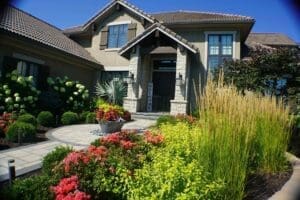 Front garden pots are one of the simplest ways to add style, but scale matters tremendously.
One of the most common mistakes is using containers that are too small. Undersized pots can make the entry feel sparse, temporary, or like the homeowner ran out of budget. They also limit the amount of soil available, which makes it harder to grow full, healthy, luxurious plantings.
For many larger homes, a 24-inch to 30-inch pot is a better starting point. For grander entries or large-scale homes, we may go up to 36 inches wide or larger depending on the location and architecture.
Stone, cast stone, or other substantial containers tend to look more timeless and elevated than lightweight decorative pots.
Also, don’t limit containers to simply flanking the front door. Pulling containers across the front of the home, near walkways, courtyard spaces, garden beds, or architectural transitions creates styled vignettes and adds depth.
Robyn’s Tip
Not every garden container has to be over-the-top planted. A tasteful, large-scale fern or a restrained combination of ferns and greenery can create a high-style look without feeling like you’re trying too hard.
3. Incorporate Climbing Vines, Eyebrow Pergolas, and Attached Trellises
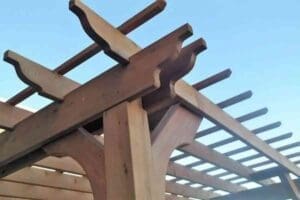 Climbing vines, eyebrow pergolas, and attached trellises can make a home feel instantly more layered and custom.
These details add architecture where the house may feel flat. They soften hard materials, create shadow, and bring an established garden feeling to the façade.
This works for many home styles:
- – Modern homes gain warmth and organic texture.
- – Traditional homes gain charm and permanence.
- – Old-world homes gain romance and authenticity.
- – Transitional homes gain character and depth.
An eyebrow pergola over a garage, window, or entry can create a subtle architectural moment without needing a major renovation. Attached trellises can bring vertical greenery to otherwise blank walls and help connect the home to the landscape.
The result is a home that feels less like a structure sitting in a yard and more like a residence nestled into a thoughtful garden.
4. Plant in Layers Instead of Relying on Builder-Grade Foundation Plantings
 Builder-grade foundation planting is usually the bare minimum: one simple line of shrubs along the base of the home, sometimes with a few plants on the other side of the sidewalk.
This approach often under-scales the property and makes the front feel flat, thin, and less expensive.
A more luxurious look comes from layered planting and expanded garden space. The more garden visitors experience as they approach the front door, the more intentional and elevated the home feels.
At High Prairie, we often think in a three-plane approach.
Ground Plane
This is the lowest layer. It may include groundcovers, low perennials, sedges, edging plants, or plants that softly overflow onto walkways.
Examples might include:
- ✔ Cranesbill geranium
- ✔ Poppy mallow
- ✔ Sedges
- ✔ Low ornamental grasses
- ✔ Creeping or mounding perennials
This layer softens edges and prevents the garden from feeling bare.
Middle Layer
This layer includes shrubs, fuller perennials, and medium-height plants that provide body, texture, and seasonal interest.
This is where the garden begins to feel lush rather than sparse.
Architectural Height
This includes upright ornamental trees, shade trees, evergreens, large shrubs, and structural plantings.
This layer gives the garden rhythm, height, and proportion. It helps the landscape match the scale of the home.
The goal is to create depth. Even if the planting beds are small, layers make the front of the home feel more complete, more mature, and more luxurious.
5.Create a Welcoming Courtyard Before the Front Stoop
 A luxury front entry is not only about what people see. It is about what they experience.
Creating a small courtyard or arrival moment before the front stoop can transform the way the front of the home feels.
This might include:
- ✔ A destination bench
- ✔ A small water feature
- ✔ A stone landing
- ✔ A garden path
- ✔ A sculptural container
- ✔ A small gathering space
- ✔ A layered planting moment around the entry
A bench does not only serve as seating. It also acts as a functional aesthetic detail. It creates a vignette, draws the eye, and suggests hospitality.
Even a small courtyard-like space can make the front entry feel more intentional. It gives guests a moment of arrival before they reach the door.
That sense of pause is part of what makes a home feel expensive.
6. Consider Sun, Wind, Rain, Privacy, and Comfort
 A beautiful front entry should also feel comfortable.
Think about how people actually experience the front of your home:
- – Is the front walk exposed to harsh afternoon sun?
- – Does wind whip around the entry?
- – Is the front door too visible from the street?
- – Does rain make the entry uncomfortable?
- – Is there a place to pause comfortably?
Luxury design solves comfort problems beautifully.
An appropriately placed shade tree, ornamental tree, evergreen screen, privacy trellis, or architectural screen can improve the experience of arriving at the home.
This is especially important in Kansas City, where front landscapes have to handle strong summer heat, wind, storms, humidity, and winter exposure.
A front garden that provides shade, softness, privacy, and protection will always feel more elevated than one that only looks decorative.
7. Hide Deliveries Beautifully Instead of Letting Packages Clutter the Entry
 Modern life has changed the front stoop. Package delivery is now part of daily living, and ignoring that reality can make even a beautiful entry feel cluttered.
Parcel drop boxes can be useful, but they do not have to look bulky or utilitarian. They can be integrated into the design of the front entry in a way that feels intentional.
Robyn’s Tip
One of my favorite alternatives to a full parcel storage box is adding an exterior stone console table near the front entry.
It gives delivery drivers a natural place to tuck packages underneath while also creating a beautiful vignette opportunity on top. You can style it with vessels, lanterns, seasonal greens, sculpture, or a simple planted container.
It solves a modern functional problem while adding a layer of beauty.
8. Add a Robust Outdoor Lighting System
 Outdoor lighting is one of the most powerful ways to make the front of your home feel luxurious.
A basic lighting system may illuminate the front walk and the face of the home. A truly elevated lighting plan does more.
It softly highlights:
- ✔ Garden layers
- ✔ Ornamental trees
- ✔ Architecture
- ✔ Containers
- ✔ Stonework
- ✔ Water features
- ✔ Benches or courtyard moments
- ✔ Favorite plant textures
The goal is not to over-light the property. The goal is to create depth, warmth, and atmosphere.
A layered lighting plan can make the home feel more beautiful at night than it does during the day. It also extends the experience of the garden into evening hours and creates a more welcoming sense of arrival.
In Kansas City, where we experience long winter evenings and outdoor entertaining seasons that stretch into fall, lighting is one of the best investments for year-round enjoyment.
9. Add Fragrance Near the Front Door
 Luxury should engage more than the eyes.
Fragrance is one of the most overlooked ways to make the front of a home feel memorable. When guests walk toward the door and notice something blooming, fresh, herbal, or citrusy, the experience becomes more emotional.
Fragrance can come from:
- – Seasonal containers
- – Flowering shrubs
- – Herbs
- – Climbing vines
- – Roses
- – Lavender
- – Citrus trees
- – Gardenias in protected seasonal containers
Robyn’s Tip
One of my favorite tricks at home is adding lemon trees to my garden containers. I like to keep a lemon tree near the front door during summer and bring it inside in winter.
When it blooms, the fragrance is amazing, and I get compliments on it all the time.
10. Refresh the Front Door Color
 One of the simplest ways to create a high-style change with minimal investment is to reconsider the color of your front door.
A front door color can shift the entire personality of the home.
Depending on the architecture, consider:
- ✔ Warm black
- ✔ Deep green
- ✔ Muted blue
- ✔ Charcoal
- ✔ Clay
- ✔ Soft taupe
- ✔ Rich brown
- ✔ Historic red
- ✔ Creamy neutral
The right color should complement the home, the garden, the roof, the stone or brick, and the surrounding materials.
This is a small detail, but when it is done well, it can make the whole front elevation feel more finished.
Common Kansas City Pain Points Related to Front Yard Luxury
Kansas City homeowners often struggle with front landscapes that feel:
- – Too builder-grade
- – Too flat
- – Under-scaled for the home
- – Sparse around the front walk
- – Lacking shade or privacy
- – Disconnected from the architecture
- – Too reliant on lawn
- – Poorly lit at night
- – Cluttered by deliveries or daily life
- – Lacking personality and sensory detail
Many homes have beautiful interiors but front landscapes that do not match the same level of care or style.
Key Benefits to Emphasize
Strategic front-of-home investments can:
- ✔ Increase perceived home value
- ✔ Create a stronger first impression
- ✔ Make the home feel more custom
- ✔ Improve the guest arrival experience
- ✔ Add beauty without overcomplication
- ✔ Make the property feel more established
- ✔ Support lifestyle, comfort, and daily enjoyment
- ✔ Help the exterior reflect the quality of the interior
Why a Kansas City Homeowner Would Choose High Prairie Outdoors
High Prairie Outdoors approaches the front of the home as part of a complete alfresco lifestyle, not just a curb appeal project.
The difference is in the way we consider:
- – Architecture
- – Scale
- – Planting layers
- – Seasonal beauty
- – Lighting
- – Outdoor furnishings
- – Long-term care
- – Comfort
- – Kansas City climate realities
- – How the family actually lives
Instead of simply adding plants, High Prairie designs, crafts, and nourishes outdoor spaces that feel intentional, enduring, and deeply connected to the home.
Considerations When Hiring for This Type of Project
Before hiring someone to elevate the front of your home, consider:
- – Do they understand scale and proportion?
- – Can they connect the landscape to the architecture?
- – Do they understand Kansas City soils, heat, freeze-thaw cycles, and seasonal stress?
- – Can they handle lighting, planting, hardscape, containers, and care together?
- – Do they think beyond “foundation shrubs”?
- – Can they create a long-term plan instead of a quick cosmetic fix?
Luxury curb appeal is not just about buying expensive materials. It is about making the right decisions in the right order.
Who This Service Is a Fit For
This is a strong fit for homeowners who:
- – Want their home to feel more custom and elevated
- – Have invested in interiors and want the exterior to match
- – Feel their front landscape is too basic or builder-grade
- – Want to improve arrival experience
- – Value garden beauty and long-term care
- – Want a more thoughtful, layered, lifestyle-driven property
Who This Service Is Not a Fit For
This may not be the right fit for someone who:
- – Only wants the cheapest curb appeal fix
- – Wants a few shrubs installed without design consideration
- – Does not value long-term care
- – Prefers a minimal, bare landscape
- – Is not interested in investing in quality materials or proper scale
- – Wants a quick flip rather than an enduring improvement
Frequently Asked Questions
1. What is the easiest way to make the front of my home look more expensive?
The easiest starting points are properly scaled containers, updated lighting, a refreshed front door color, and improved planting layers. These create quick visual impact without requiring a full renovation.
2. Why do small front pots make a home look less luxurious?
Small pots often look under-scaled from the street and do not provide enough soil volume for lush plantings. Larger containers create weight, proportion, and a more intentional entry experience.
3. Do I need a large front yard to create a luxury look?
No. Luxury is more about proportion and layering than size. Even a small front entry can feel elevated with the right containers, lighting, architectural details, and planting strategy.
4. Is front yard lighting worth the investment?
Yes. Lighting adds depth, ambiance, safety, and nighttime beauty. A well-designed lighting system can completely change how the home feels after sunset.
5. What plants make a front entry feel more high-end?
Plants that provide structure, texture, fragrance, and seasonal interest tend to feel more elevated. Think ornamental trees, evergreens, layered shrubs, refined perennials, fragrant vines, and substantial seasonal containers.
6. How do I avoid making my front entry look overdone?
Focus on scale, restraint, repetition, and materials. A few thoughtful upgrades often look more luxurious than too many decorative elements competing for attention.
Local Kansas City Details That Show Expertise
Kansas City front landscapes have to work harder than many homeowners realize.
We design around:
- ✔ Clay soils
- ✔ Freeze-thaw cycles
- ✔ Hot summers
- ✔ Heavy rains
- ✔ Winter exposure
- ✔ Mature neighborhood architecture
- ✔ Newer builder-grade subdivisions
- ✔ Large lawns with undersized beds
- ✔ The need for year-round structure
A successful front garden in Kansas City should look beautiful in spring and summer, but it also needs evergreen structure, lighting, and strong bones for fall and winter.
Additional Tips, Tricks, and Advice
- ✔ Choose fewer, better materials instead of many disconnected accents.
- ✔ Repeat container styles or plant varieties for a more sophisticated look.
- ✔ Use fragrance near the entry whenever possible.
- ✔ Avoid undersized pots, undersized beds, and tiny shrubs against large homes.
- ✔ Use benches as visual anchors, not just seating.
- ✔ Create a sense of arrival before the front door.
- ✔ Think about what the front of your home looks like at night, not just during the day.
- ✔ Design for comfort as much as beauty.
- ✔ Let the landscape support the architecture instead of competing with it.
- ✔ Invest in long-term care so the garden gets better with time.
Luxury at the front of the home is not about showing off. It is about creating an arrival that feels thoughtful, beautiful, comfortable, and deeply connected to the way you live.